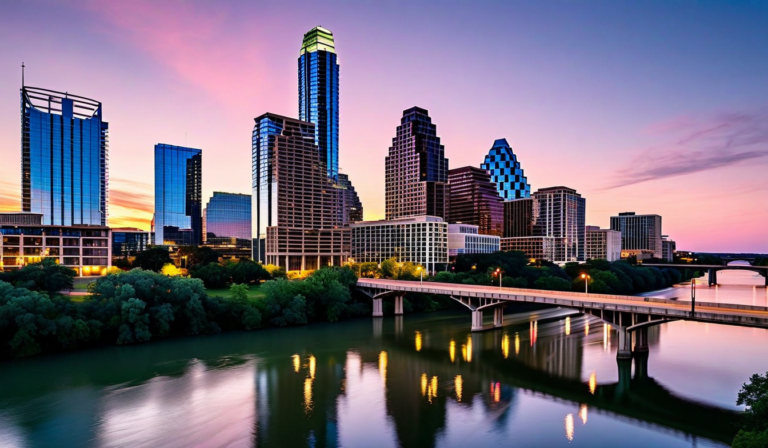
Every six months or so, someone publishes a piece about how Austin's startup moment has passed. The housing got expensive, the transplants kept coming, the venture money is drying up. And every six months, those predictions fail to materialize into reality.
We've been based on Congress Avenue since 2019. We've watched this city change, genuinely grapple with its growth pains, and still emerge as one of the best places in the country to start something. Here's why we believe that—not as a promotional exercise, but as investors who have to put money where our analysis is.
The Talent Pool Is Deeper Than People Think
The common narrative is that Austin talent comes in two flavors: UT graduates and California transplants. That's outdated. Over the past five years, a substantial number of experienced operators have relocated here from across the country—not just from the coasts. We're talking people with genuine domain expertise in fintech, healthcare, logistics, defense tech, and manufacturing.
Texas A&M, UT Austin, and Rice together produce around 30,000 engineering and business graduates annually. A growing percentage of them are choosing to stay in Texas rather than move to San Francisco or New York. That's a significant and fairly recent shift.
The startups in our portfolio that have had the least trouble hiring are the ones based in Austin. Not remote-first companies headquartered elsewhere. The actual Austin-based companies.
The Cost Advantage Is Still Real
Yes, Austin rent is higher than it was in 2018. It's not even close to San Francisco or New York. Office space, operational costs, and compensation expectations for early employees are all lower than coastal equivalents. That gap translates directly into runway.
A seed-stage company in Austin might get 18–24 months of runway from $750K. The same company in San Francisco might get 12–15 months from the same capital. That extra time matters enormously at the pre-product-market-fit stage. It's the difference between finding your footing and running out of money before you do.
The Capital Ecosystem Has Matured
When we started Inprimio in 2019, Austin had a handful of early-stage funds and a lot of angel investors who were primarily checking industry boxes. Things have changed. There are now multiple credible seed funds in the city, a growing community of operators who have sold companies and are writing angel checks, and a more reliable set of pathways to Series A capital.
The story about Austin startups having to fly to San Francisco to raise a Series A is still true for some companies in some sectors. But it's less universally true than it was five years ago. More institutional capital from both coasts has established a presence here, or at least pays consistent attention to deals originating from the Texas ecosystem.
Regulatory and Business Environment
Texas has no state income tax, a business-friendly regulatory environment, and a government that has—whatever you think of the politics—consistently prioritized attracting business investment. For companies in sectors like energy, agriculture, logistics, and real estate tech, being geographically close to the industries they're disrupting matters. Austin is roughly four hours from Houston's energy complex, surrounded by agricultural land, and positioned in the middle of major freight corridors.
Founder-market fit applies to cities too. If you're building something for the energy sector, Austin is a more natural home than Boston.
The Culture Is Different. That's a Feature.
Austin startup culture is less status-oriented than Silicon Valley. People return emails. Introductions happen fast. There's a genuine peer community among founders that is relatively open to newcomers. We've seen founders from our portfolio get meaningful help from founders of other Austin companies—introductions, candidate referrals, customer references—with no transactional strings attached.
This isn't unique to Austin, but it's more consistent here than in places where every interaction carries a social cost calculation. That matters when you're early and desperate for help.
The Counter-Arguments Are Mostly Structural
The legitimate criticisms of Austin as a startup hub are structural, not fatal. The flight connections to major international markets are less comprehensive than New York or San Francisco. The talent depth in specific technical specializations—deep ML research, certain biotech disciplines—is thinner. For some companies targeting enterprise sales in specific industries, the geography creates friction.
These are real. They're also solvable with intentional effort. And for the majority of the seed-stage founders we work with, they're secondary concerns.
Why We're Here
We chose Austin as our base because we believe the best founders in the next generation of significant companies are disproportionately likely to build them here. That might be bias—we're here, after all. But it's also based on seven years of evidence that keeps reinforcing the thesis.
If you're building in Austin, or considering it, we'd genuinely like to talk. And if you're building elsewhere but targeting markets where Texas geography is an asset, we're paying attention to that too. Reach us at [email protected].